A class above...
a class below
Social segregation within Australia’s schooling system has become so ingrained it’s affecting our broader society

“I’ve only become aware of the levels of inequality in our school system relatively recently.
“When you’re a young teacher, coming up through the system with nothing to compare it to, you’re just focused on the day to day, and what you need to do to achieve learning progress for the kids while creating positive school culture.


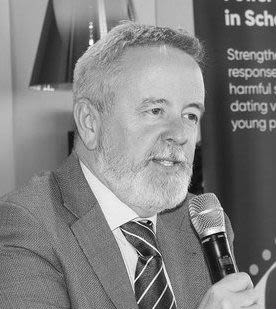
ANDY MISON AT THE POWER TO KIDS IN SCHOOLS LAUNCH, JULY 2024. @ANDY_MISON.
“Now, I’m so disturbed. I really believe in the promise of an equitable, high-quality public education for every kid in Australia – that is the promise and the potential of that country. But it’s drifting away from us.”
– Andy Mison, president and executive director of the Australian Secondary Principals’ Association
I got a glimpse into what disadvantage really means when I moved to London. There, while trying to eke out a living as a freelance journalist, I took a side gig as a teaching assistant and was placed in schools around the city. In particular, I was regularly stationed in Pupil Referral Units (PRUs), colloquially referred to as “prison units”.
These are alternative education centres for kids unable to attend conventional schooling, due to behavioural problems, mental health issues or lack of available placements. For kids kicked out of state-run schools, there’s nowhere else to go. But in practice they’re being dumped into places offering little more than glorified babysitting. Placement in these units is intended to be for short periods only, but I never saw anyone leave, and PRU teachers told me no one had any hope to do so.
On my first day at the PRU, teachers were charged with chaperoning kids to the bus stop and waiting while each one boarded. I initially presumed it was for the public’s safety. I found out it was for the kids’ safety, since one of their classmates had been stabbed outside the front gate the prior week. I learnt this when I was pulled into a group therapy session for the teachers.
Over the next year or so, on intermittent visits, I heard the full gamut of horror stories: abuse, neglect, gangs, poverty. How the kids were expected to attain any useful level of education was beyond me.
But I do remember one kid, Joshua, who would sit quietly while the others created chaos. He completed his work and spoke about wanting to get into politics to make the world a better place. He reminded me of all the leg-ups I was afforded, by the luck of my circumstances. I understood that if I had instead experienced life as Joshua had, I would probably be in the same position he was.
Australia has one of the world’s most socioeconomically segregated schooling systems, according to a recent OECD report.
Overwhelmingly, Australian students who come from backgrounds that require additional resources are attending schools with the fewest resources. Correspondingly, the children from the most advantaged backgrounds are attending the most well-endowed.
But everyone knows that already. If you look at just about any location around Australia, children are being segregated by wealth into different school systems: the independent schools for the rich, Catholic schools for the middle class, and public schools for the poor.
On the My School website you can look up any school in the country and see its Index of Community Socio-educational Advantage (ICSEA) rating. Basically, it measures a school’s relative level of socioeconomic advantage by looking at parents’ occupations and education levels, as well as remoteness and proportion of Indigenous student enrolment. Each school in the country is then ranked to determine how educationally advantaged it is, on a 1–100 percentile scale.
You can pick out almost any location across the country and see social division playing out within our schools. Here, I’ve randomly searched locations, looking at the ICSEA ratings of schools within the same small geographic radius.
The same pattern repeats in every state.
Take, for example, Ballarat, in regional Victoria. Along a stretch of road in the south of the suburb of Lake Wendouree, there are three schools.
Driving in from the west, you’ll pass by the public Ballarat High School on your left.
About one kilometre down the road, you’ll find the Catholic all-girls Loreto College.
One kilometre further down, on the right you will find the Uniting Church–affiliated Clarendon College.
The difference between Ballarat High and Loreto’s ICSEA percentile is precisely 22 per cent.
Along the second kilometre stretch, there is another precisely 22 per cent difference between the ICSEA percentile of Loreto and Clarendon.
Within just two kilometres, you can see how our schools have been segregated on socioeconomic lines.
So, what do those few extra metres down the street in Lake Wendouree do for a student?

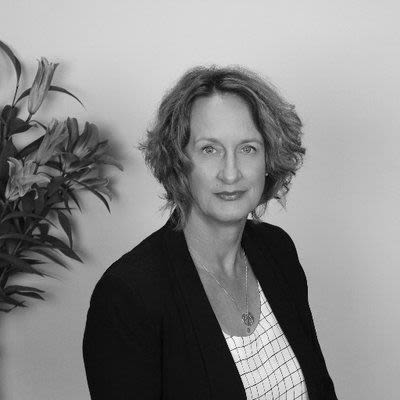
SHEREE VERTIGAN. @SHEREEVERTIGAN.
“What does disadvantage mean? Line up two schools beside each other, then look at the difference in educational attainment...
– Sheree Vertigan, former executive director and national president of the Australian Secondary Principals’ Association





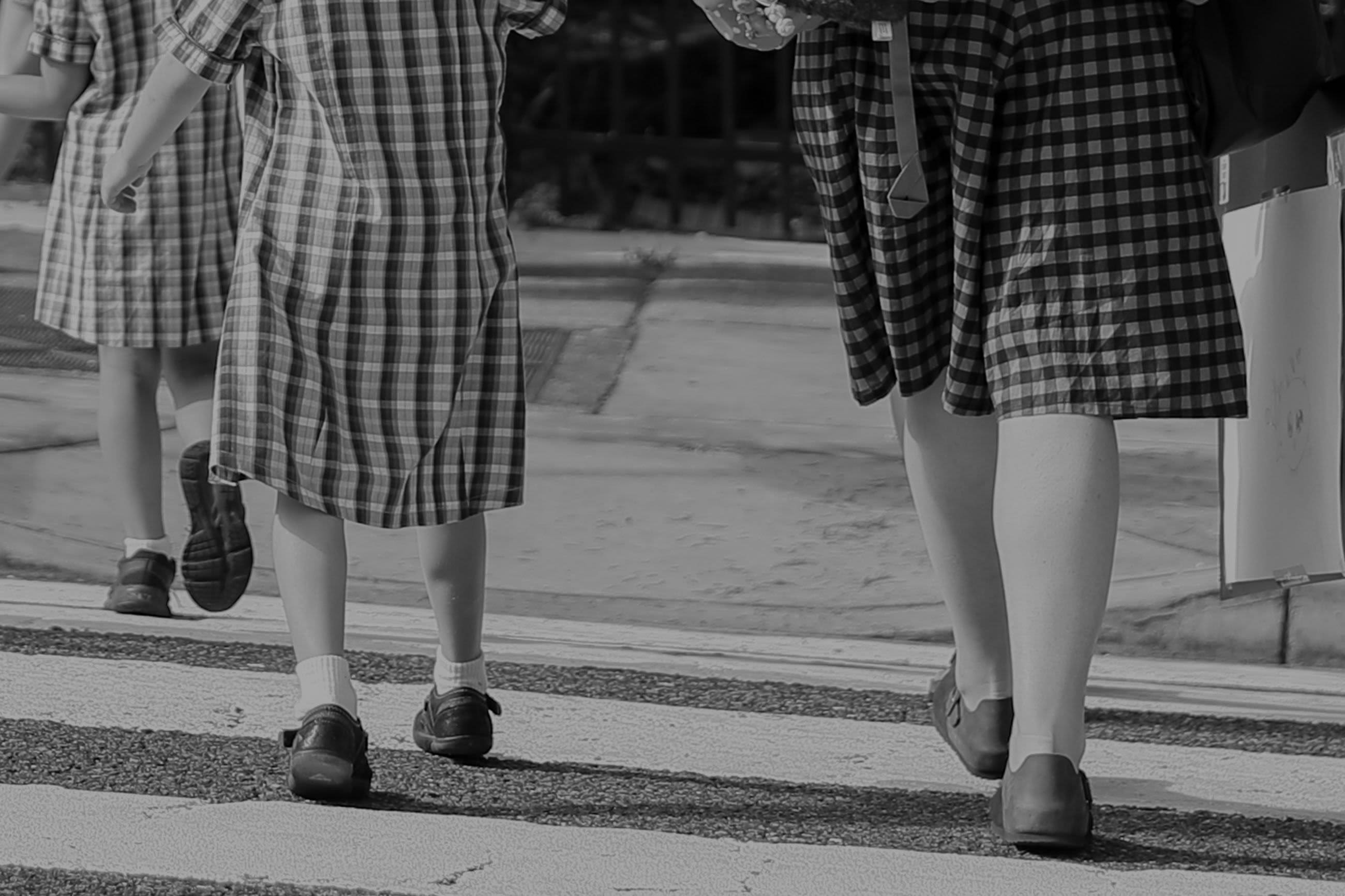

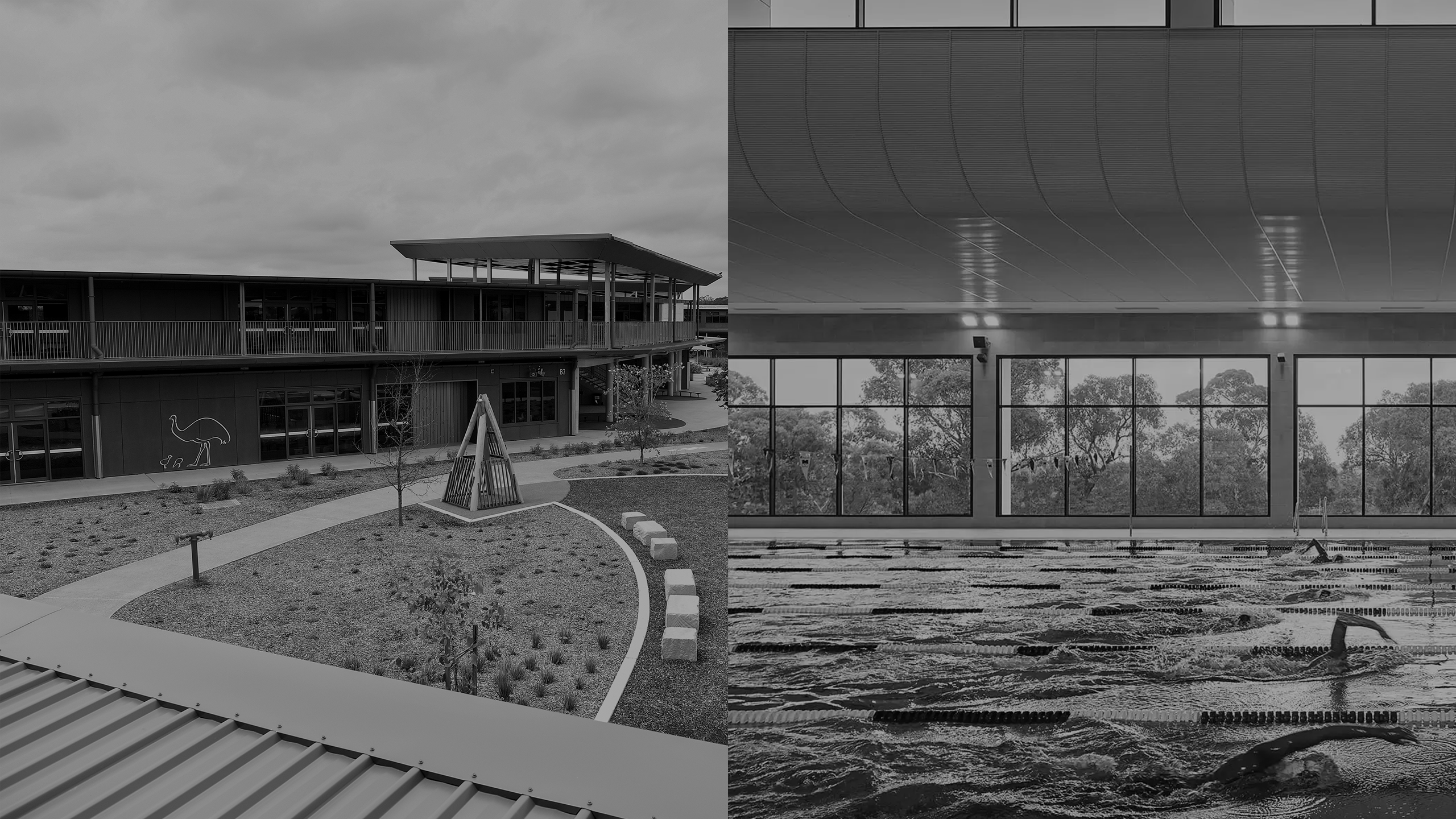

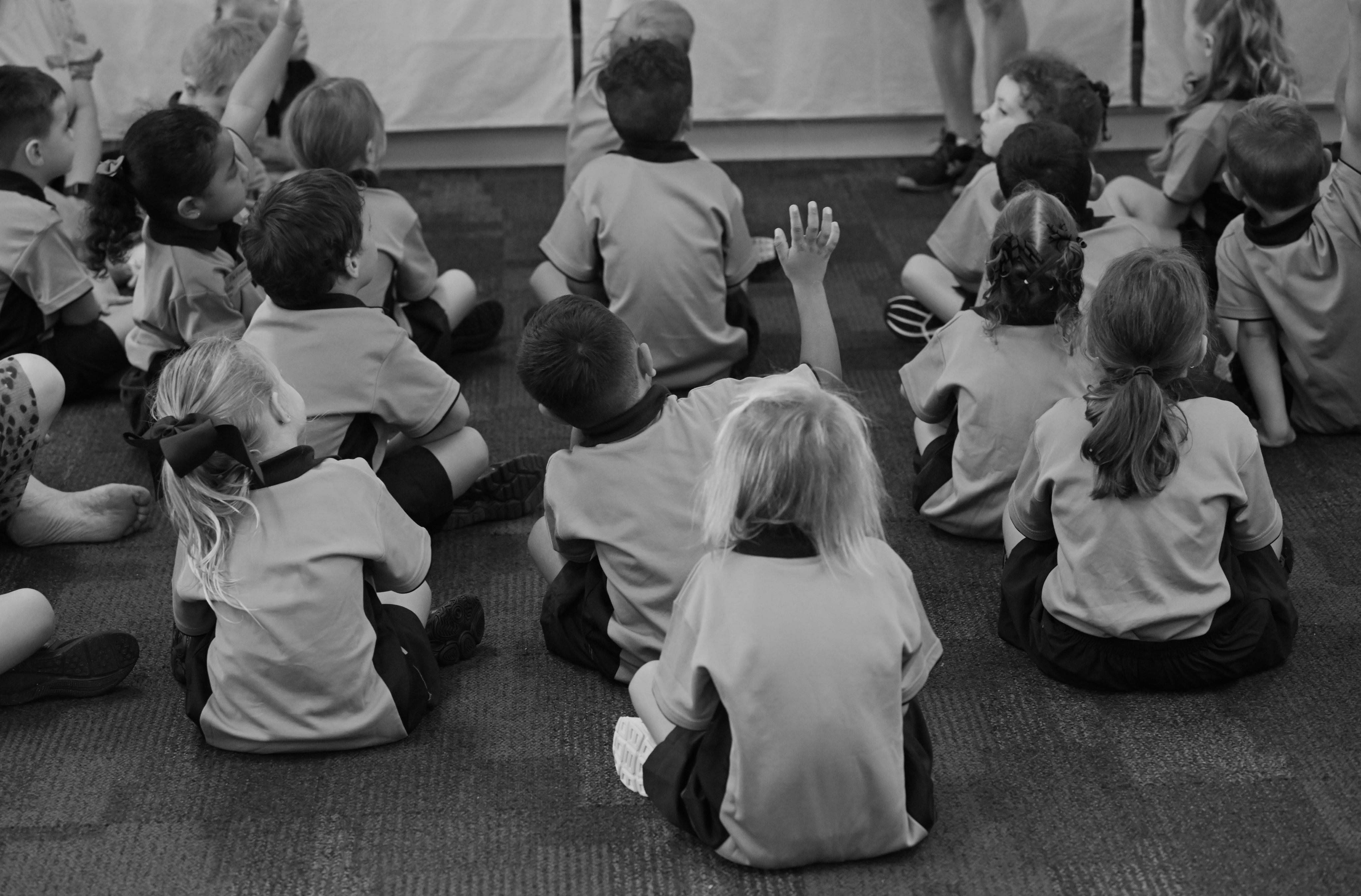

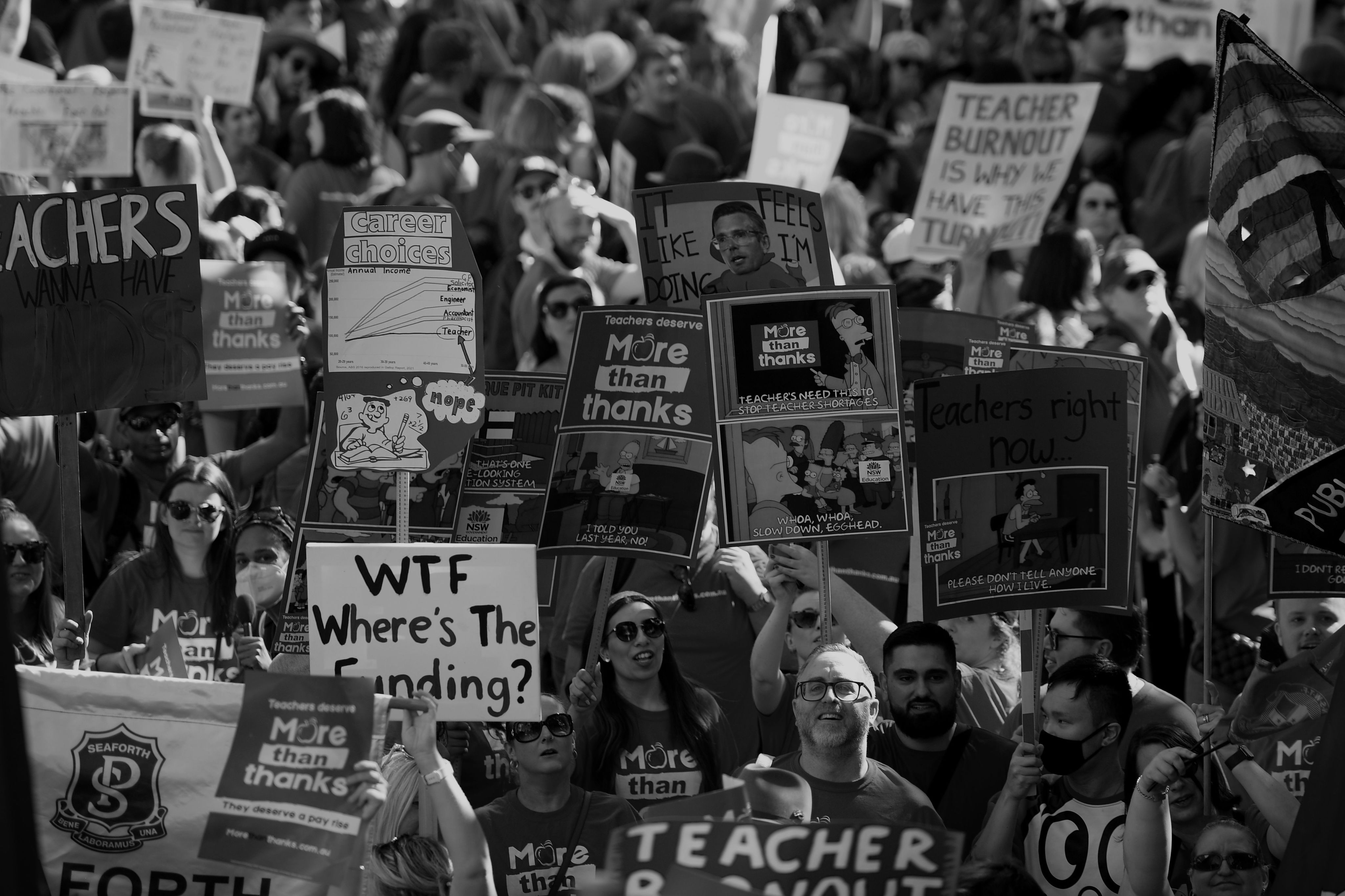
“Ask yourself the question:
what is the difference due to?
“You say that there's often quite a difference between two classrooms – but that's primarily around teacher quality.
“The chances are a teacher at an independent school will get paid a lot more than a person who’s teaching in the public school. There is always some poaching of teachers from the government sector into the non-government sector. They do that by paying them higher wages, as well as other privileges government schools can’t offer because of regulations.
“If you’ve got students who have low literacy, low numeracy, low digital awareness – that’s very expensive to provide the interventions required. Public schools usually don’t have enough people in classrooms supporting those students with disadvantage.
“The challenge of overcoming that is really, really hard. Plus, we’ve also got increasing trauma in our communities. I don’t think that for a long time our teachers are prepared or resourced to deal with that.
“So, you can start to see all the things that contribute to it.
“Then, it’s access to all the facilities and extracurricular things that make education interesting and exciting.
“All of these things come down to costs – these things are expensive.
“The funding isn’t equitable – that’s the first thing. But there are so many other factors that come into play.”
“But disadvantage is more than that.
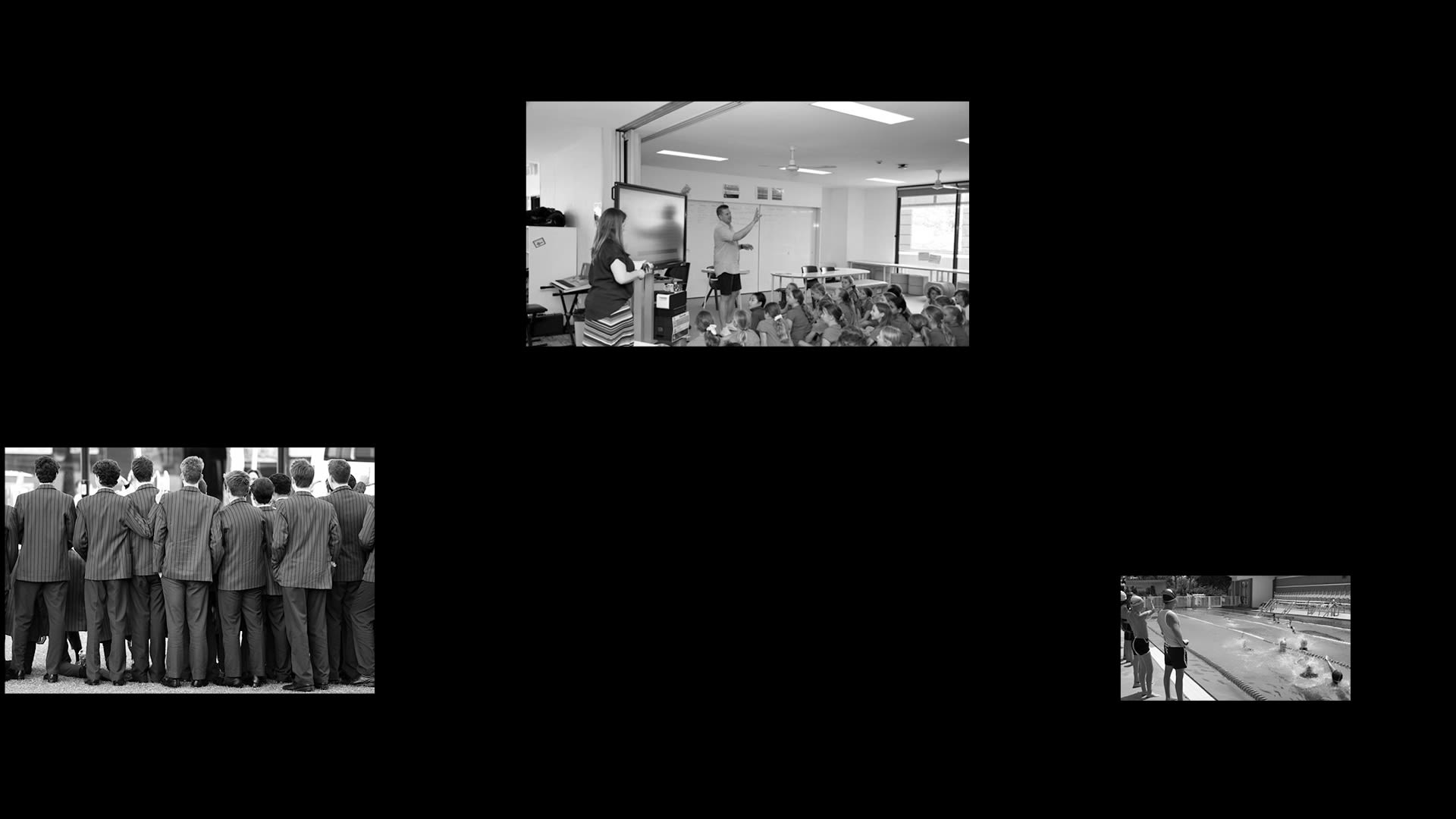
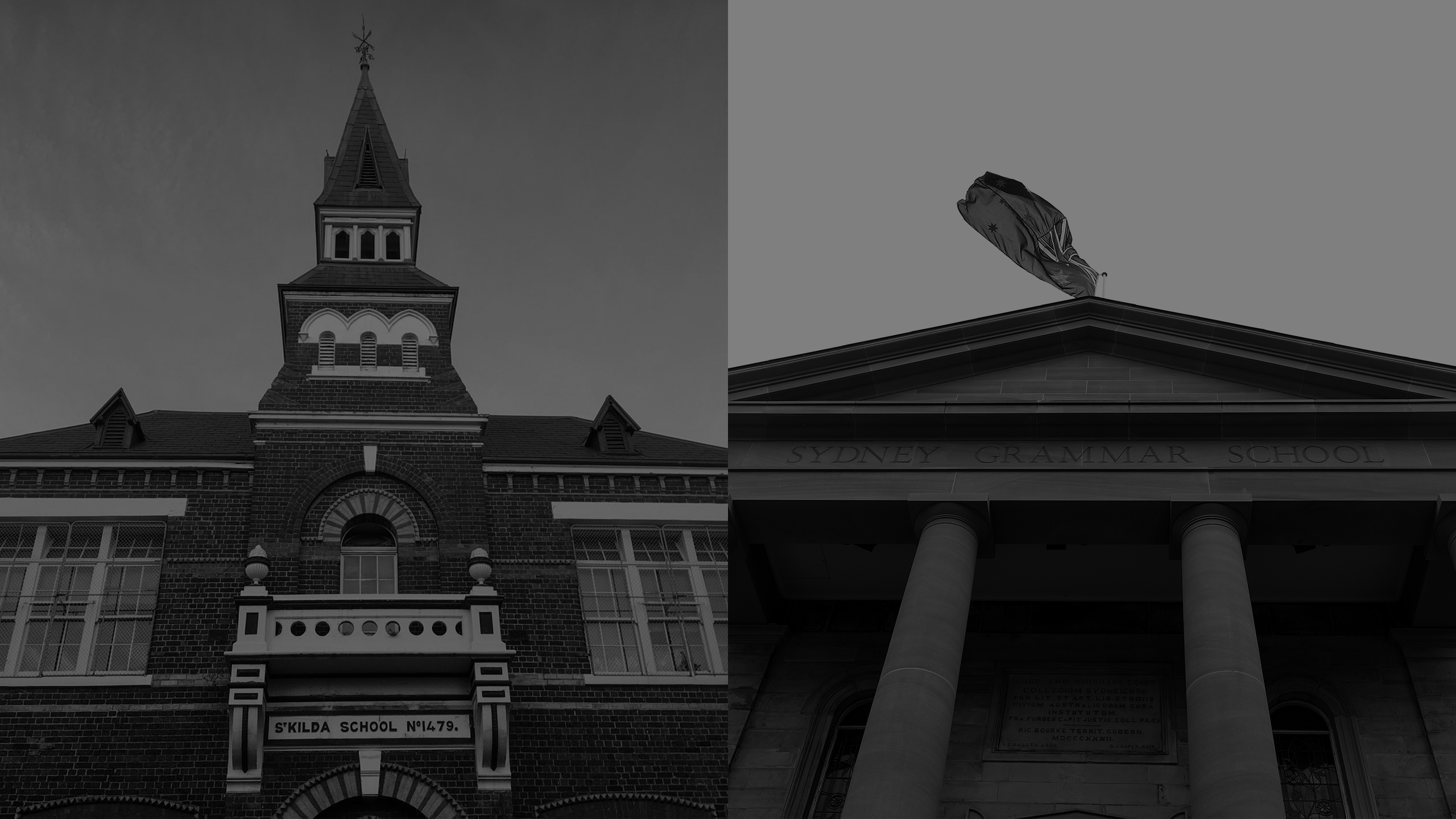
1. ST KILDA PRIMARY SCHOOL. @STKILDAPS
2. SYDNEY GRAMMAR SCHOOL, IN SYDNEY, THURSDAY, OCT. 27, 2016. AAP IMAGE/DAN HIMBRECHTS.
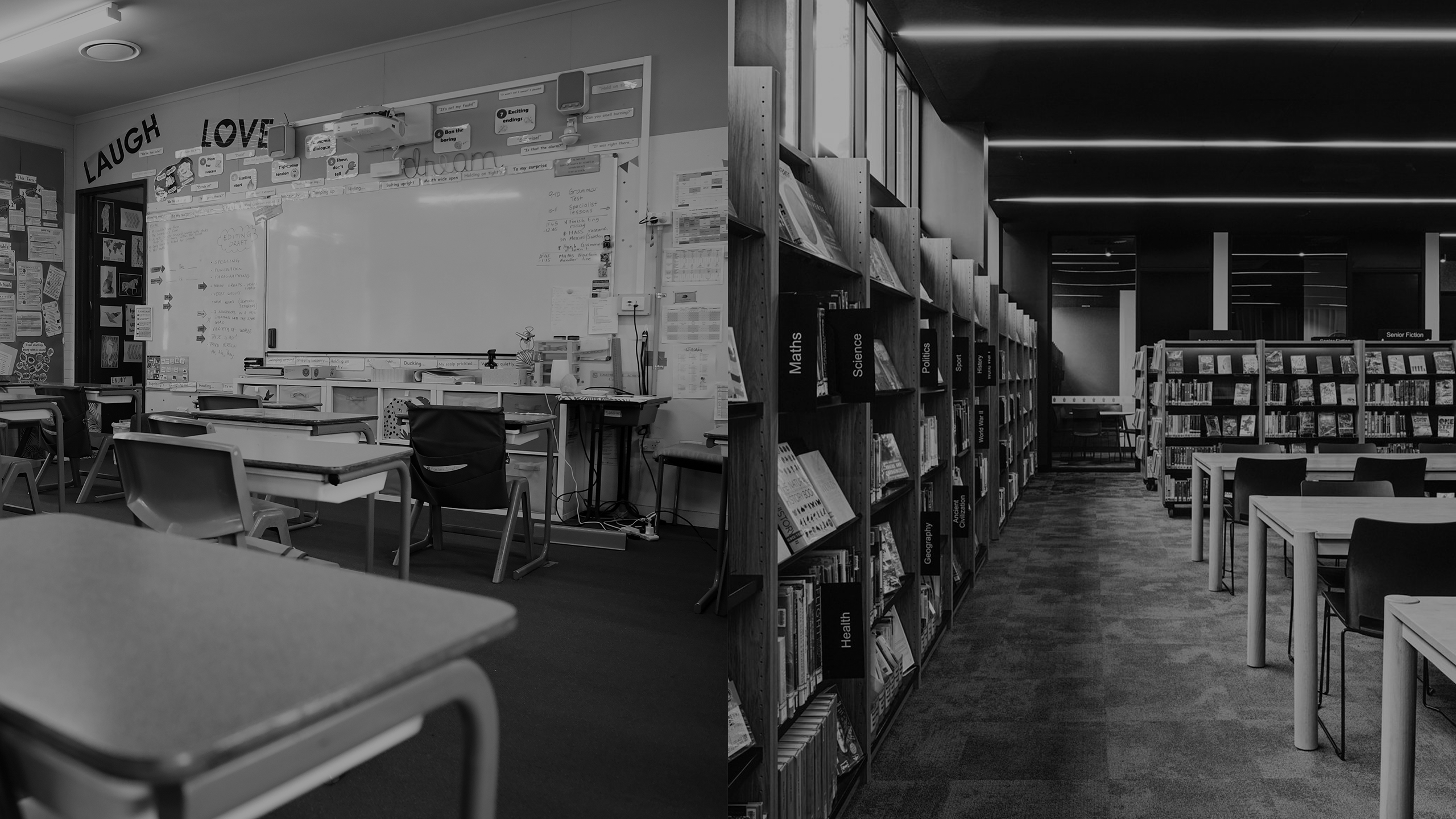
3. AN EMPTY CLASSROOM IS SEEN AT A PRIMARY SCHOOL IN BRISBANE, MONDAY, MARCH 30, 2020. AAP IMAGE/DAN PELED.
4. ST KEVIN’S COLLEGE HEYINGTON CAMPUS SENIOR LIBRARY. @CHANDLERARCHITECTURE.
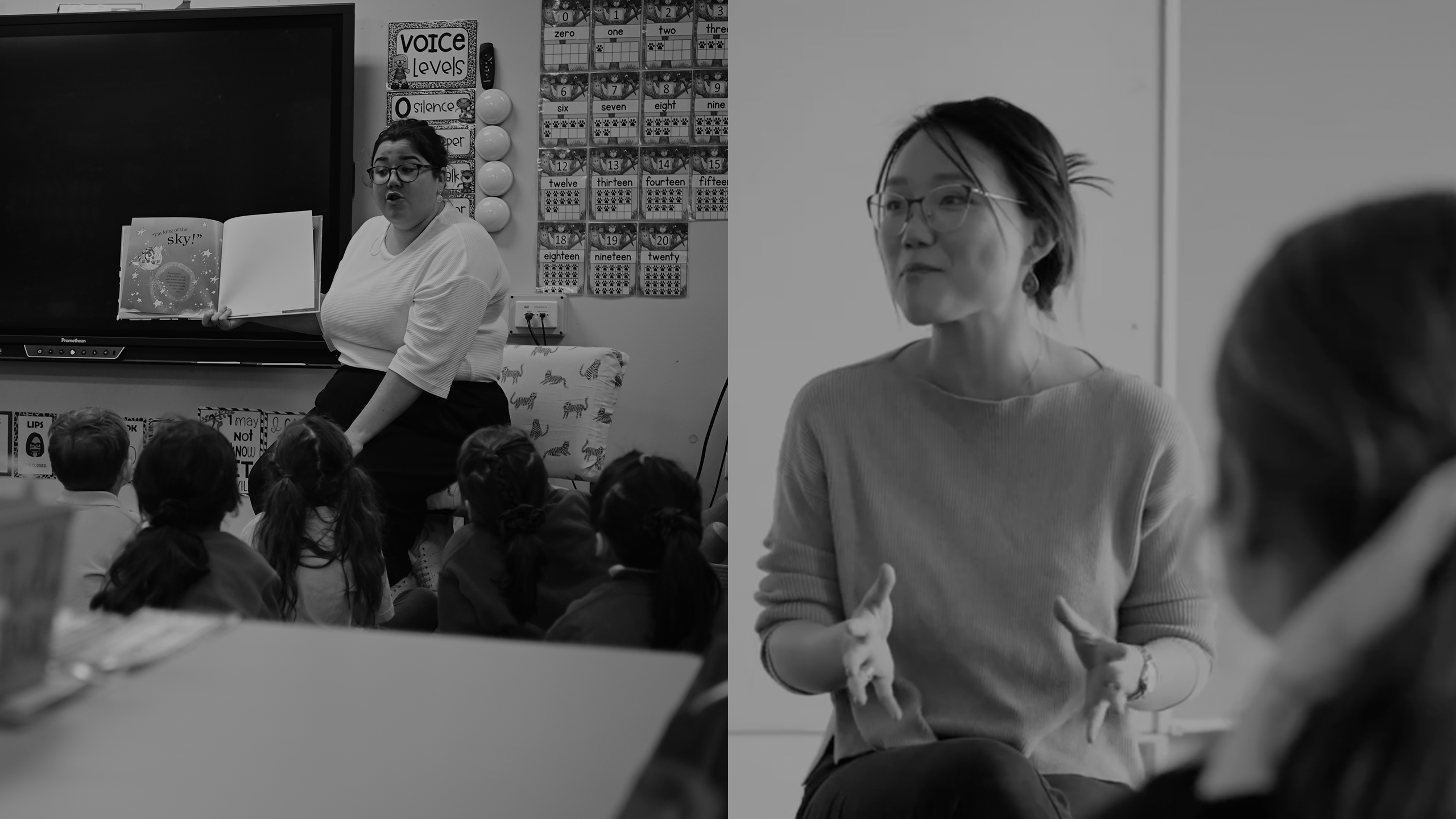
5. KINDERGARTEN STUDENTS DURING A READING ACTIVITY AT ANNANDALE PUBLIC SCHOOL IN SYDNEY, MONDAY, MAY 25, 2020. AAP IMAGE/JOEL CARRETT.
6. A TEACHER AT MELBOURNE GIRLS GRAMMAR MERTON HALL CAMPUS. @MELBOURNEGIRLSGRAMMAR.
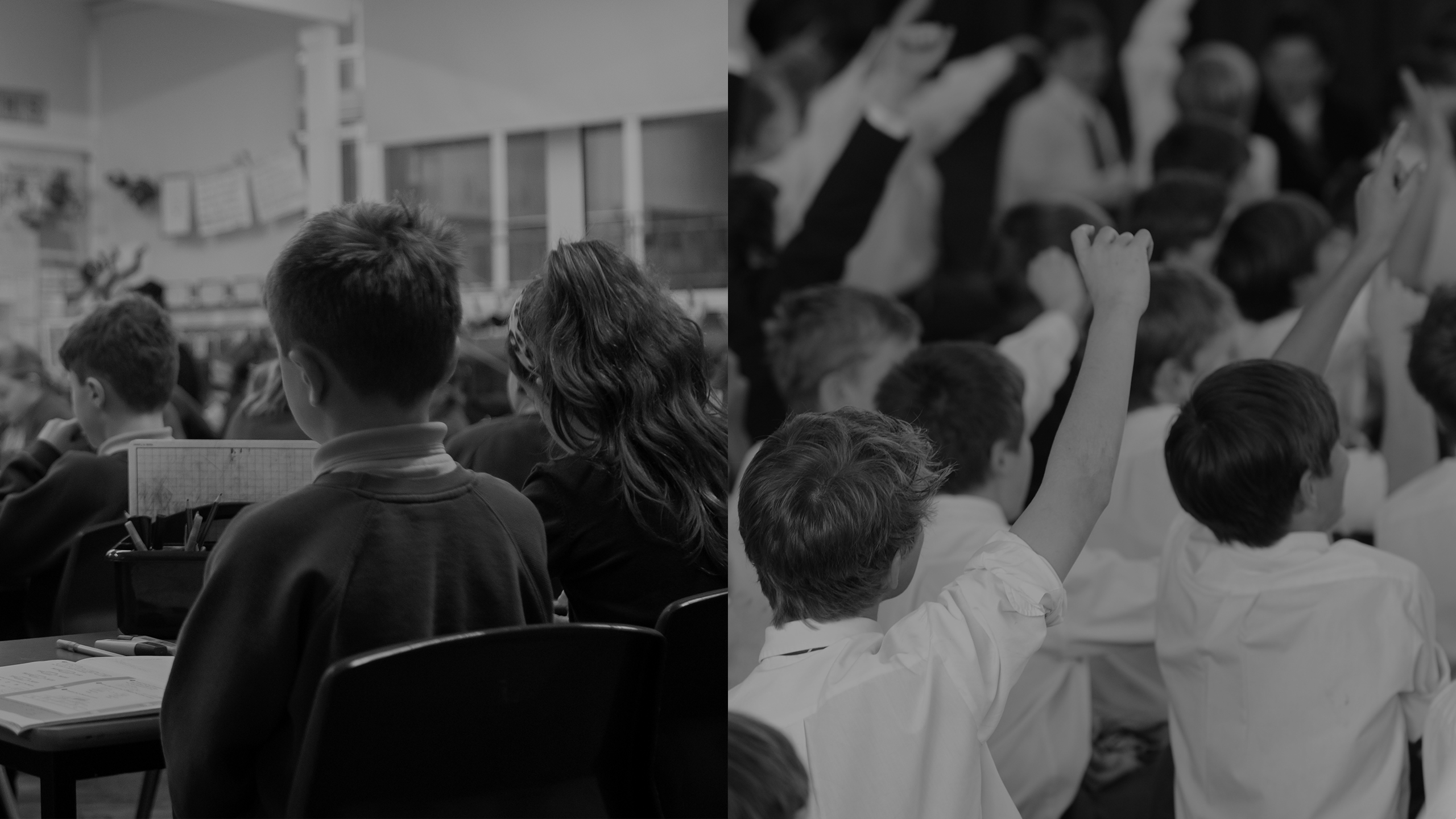
7. KINDERGARTEN STUDENTS DURING A READING ACTIVITY AT ANNANDALE PUBLIC SCHOOL IN SYDNEY, MONDAY, MAY 25, 2020. AAP IMAGE/JOEL CARRETT.
8. © MICK TSIKAS / AAP IMAGES
9. THE NEWLY UPGRADED JORDAN SPRINGS PUBLIC SCHOOL, IN SYDNEY, FRIDAY, JANUARY 27, 2023. AAP IMAGE/BIANCA DE MARCHI.
10. IVANHOE GRAMMAR’S MULTI-LEVEL SPORTS AND AQUATIC CENTRE. @IVANHOEGRAMMARSCHOOL.
11. A TEACHERS STRIKE IN SYDNEY, WEDNESDAY, MAY 4, 2022. AAP IMAGE/DAN HIMBRECHTS.
12. STUDENTS ENTER A BRISBANE SCHOOL, 2022. AAP IMAGE/RUSSELL FREEMAN.
13. PREP STUDENTS AT A STATE SCHOOL ON THE GOLD COAST, 2024. AAP IMAGE/DARREN ENGLAND.
It’s no wonder that a recent study published in Large-Scale Assessments in Education found that a school’s socioeconomic status is “a strong predictor for all students regardless of their level of academic performance”, while several other studies have confirmed that that low socioeconomic schools have fewer resources, and reduced learning opportunities. The gap between the highest and lowest socioeconomic groups in terms of academic outcomes is worth three years of schooling.
Australia has had relatively high levels of economic mobility – the ability to improve one’s economic status – across generations, with a strong system of school education that has supported mobility.
However, the latest data from the OECD shows that the academic performance of our school students has been deteriorating since 2000, with disadvantaged students faring particularly poorly.
Danielle Wood, an economist and chair of the Productivity Commission, says that education is one of the most important tools for enabling economic mobility, and the declining outcomes for disadvantaged students should be a red flag for future mobility.
“If we want to be in a world where people’s economic outcomes later in life depend on talents and efforts rather than the family that [they] were born into, education is a really important piece of that puzzle,” Wood says. “It allows people, regardless of their backgrounds, to build their skills and human capital.”
Our increasingly segregated school system can have an impact on the ability of the most disadvantaged to break out of a cycle of poverty.
“It’s really important that we have mixing across the income distribution side and people are mixing at school with those from different backgrounds,” Wood says. “That seems to be really important for helping those from poorer backgrounds getting a leg-up in life.”
Emma Rowe, a senior lecturer in education at Deakin University, says that the social segregation within our schooling system, and the failure to create a more inclusive education system, is doing a disservice to broader society.
“The fundamental values of public education are absolutely pivotal to a healthy society – because it’s about social mobility,” Rowe says.
“It’s about protecting young people, as well. If you can have a really robust public education system where young people have access to services and opportunities, as a society, we all benefit from that.”
Instead, we are not only actively incentivising further social division and socioeconomic segregation through inequities in education funding, but building a culture that lionises access to privileged private schools as “aspirational”. It’s an attitude that doesn’t only accept ingrained divisions, but actively encourages them.
“Whether you go to private or public school, you might still end up in the same classroom at university, or potentially in the same office,” Rowe says.
“When you send your child to private school, what you’re buying is segregation. You want to buy a cost-based privilege and are paying to protect them from others.
“It’s a really blatant form of discrimination based on household income – and we’ve got this cultural mentality that it’s acceptable.”
We shouldn’t be surprised – and I’m sure very few are – that kids from the same geographic area are being sorted into different types of schools by their parents’ capacity to pay, either for the additional moderate fees to enrol in a Catholic school, or the more extravagant costs of a “better” independent school.
But we should be concerned. Disadvantage is not just something afflicting the impoverished. Our failure to integrate our schools socioeconomically – our efforts to excise the lesion of the most disadvantaged from educational opportunity – is damaging all of us.
Developer: Peter Desborough
Digital producers: Anna Stewart, Tom Glassey
Editors: Michael Williams, Michael Nolan, Patrick Witton, Bec Tolan
Production coordinator: Gabriella Hills
Writer: Jacob Robinson
Designers: Cameron Stevens, Lauren Stephens